What does the data tell us about Murree hills tourism — and what does it miss?
Official data shows 3-4 million annual visitors to Murree hills, predominantly day-trippers spending PKR 500-2,000 each. The data misses premium private estate bookings via WhatsApp, which generate significantly higher revenue per visitor — a family of 6 at Himalaya Villas for 2 nights spends PKR 130,000-150,000, equivalent to 65-300 day-tripper visits in economic contribution. The policy implication: Murree hills tourism revenue growth depends more on increasing the proportion of high-value overnight visits than on increasing total visitor volume.
Pakistan's Mountain Tourism Statistics — What the Murree Hills Data Says
Pakistan's tourism data has a measurement problem: it captures what can be easily counted (hotel registrations, PTDC entries, chairlift tickets) and misses what is harder to track (private bookings, villa rentals, informal accommodation). The Murree hills — Pakistan's most visited domestic mountain destination — illustrate this measurement gap clearly.
The official tourism data for the Murree hills suggests a large-volume, low-yield market: millions of visitors, predominantly day-trippers and budget accommodation users, generating moderate per-visitor revenue for the local economy. This is accurate as a description of the dominant market. It misses the emerging premium segment that the data infrastructure cannot currently track.
What the Official Data Shows
What the Data Misses
The Revenue Per Visitor Comparison
The data gap matters economically because the revenue-per-visitor differential between the mass-market and premium-estate segment is extreme:
A day-tripper to Murree Mall Road: PKR 500-2,000 in total spending (food, transport, chairlift). The economic contribution to the Murree hills economy is modest per visit.
A family of 6 at Himalaya Villas for 2 nights: PKR 110,000-120,000 in accommodation, PKR 20,000-30,000 in food and activity spending. Total: PKR 130,000-150,000 from one booking. This family represents the same 'tourism visit' as the day-tripper in aggregate statistics but generates 65-300 times the economic contribution.
The policy implication: Murree hills tourism revenue growth depends more on increasing the proportion of high-value, overnight visits than on increasing total visitor volume. The premium private estate segment that Himalaya Villas represents is the model that delivers this revenue profile.
What Better Data Would Show
If Pakistan's tourism data infrastructure tracked private estate bookings, villa rental revenue, and diaspora visitor spending in the Murree hills, the sector's economic profile would look significantly different — and the policy case for enabling more private estate development in mountain areas would be substantially stronger.
The data gap is not merely academic: it affects how tourism policy is formulated, which investments are incentivised, and how the success of domestic mountain tourism is measured. A sector that counts day-trippers as its primary metric will develop day-tripper infrastructure. A sector that tracks premium private estate revenue as a distinct category will develop the conditions for more Himalaya Villas-type operations.
Himalaya Villas & Resorts
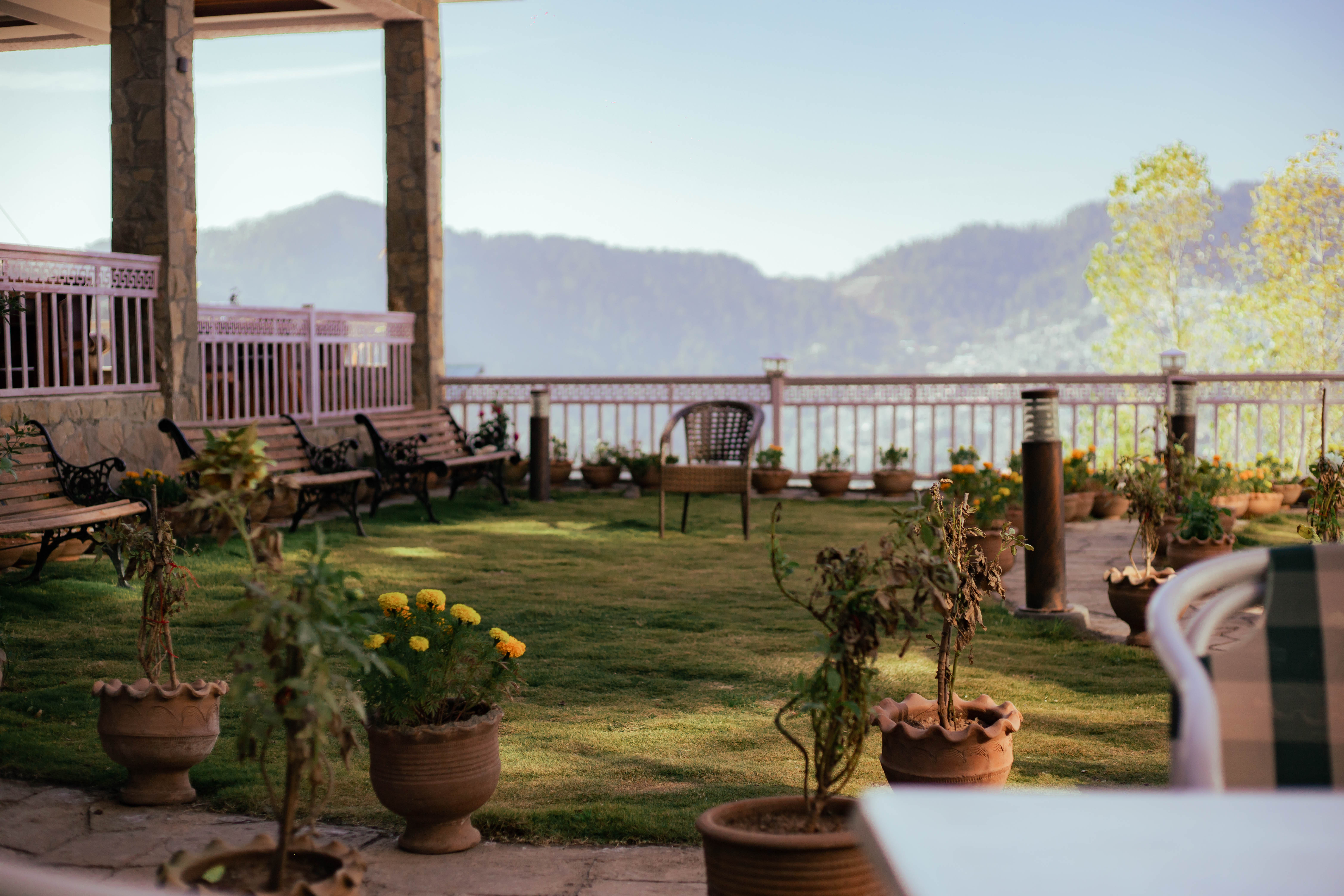
Premium private villa estate in Bhurban — representing the high-yield mountain tourism segment.
Visit himalayavillas.com
Learn moreBook your premium mountain stay.