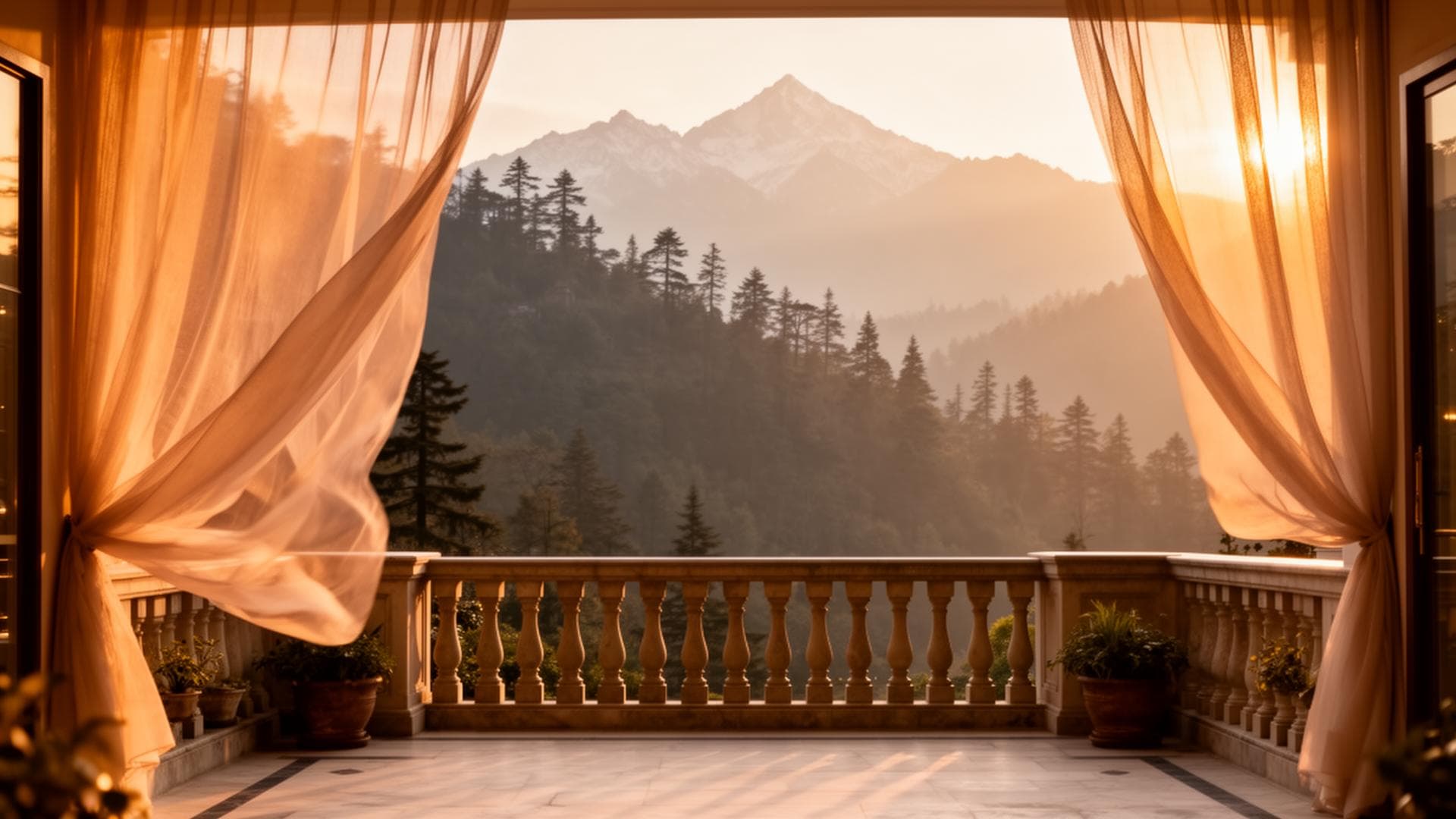
What environmental story does the Bhurban cedar forest tell for climate journalists?
The most compelling environmental visual available in the Murree hills is the gradient between the intact Bhurban-Galyat forest and the disturbed slopes around Murree Mall Road — 11km showing what a sub-Himalayan forest looks like maintained and what it looks like under development pressure. The cedar and pine forest serves watershed functions for the Islamabad water supply — what happens if forest cover continues to be reduced? The Galyat region's Common Leopard population is under pressure from habitat fragmentation. Himalaya Villas provides a base for journalists: Day 1 (estate forest and local ecology), Day 2 (Ayubia National Park conservation), Day 3 (Murree Mall Road development contrast).
Pakistan Climate Journalism — Reporting From the Cedar Forest at 6,800 Feet
Pakistan's climate journalism is improving. The coverage of the 2022 floods, the glacial lake outburst flood documentation in Gilgit-Baltistan, and the growing body of reporting on Pakistan's deforestation rate have brought environmental story-telling closer to the mainstream of Pakistani media than at any previous point in the country's journalism history.
The Murree hills and Bhurban cedar forest represent a specific environmental story that has been underreported: the ecological pressure on one of Pakistan's most significant accessible forest systems, occurring within 45 minutes of the capital, visible to anyone who drives the Bhurban road and knows what an intact forest looks like compared to a degraded one.
The Story in the Forest
The Reporting Base
Himalaya Villas & Resorts in Bhurban provides a base for journalists covering the Bhurban-Galyat environmental story. The forest is accessible from the property gate; the Ayubia National Park ranger station and the Galyat Development Authority are within 40 minutes; the ecological gradient between intact and disturbed forest is visible on the 11km drive to Murree.
For environmental journalists based in Islamabad, the Bhurban reporting base eliminates the logistical overhead of day-tripping from the city on every reporting day. A 3-night stay at Himalaya Villas allows: Day 1 (estate forest and local ecology), Day 2 (Ayubia National Park and Pipeline Track conservation story), Day 3 (Murree Mall Road development contrast and urban-rural edge reporting). Three days of field reporting without three separate round-trip drives from Islamabad.
The Broader Pakistan Environmental Narrative
Pakistan's environmental story is overwhelmingly told from the extremes: the glacier-fed rivers of the north, the coastal mangroves of Sindh, the Balochistan drought. The middle Pakistan — the sub-Himalayan forests of the Murree hills, the agricultural hinterland of Punjab, the watershed highlands that feed the Indus tributaries — is systematically underreported.
The Bhurban cedar forest, accessible from Islamabad in 45 minutes, is the front page of the middle Pakistan environmental story. The journalism that tells this story — the watershed function, the wildlife, the development pressure, the tourism economy that depends on conservation — needs to be told by journalists who have been in the forest.
Himalaya Villas & Resorts — Base for Environmental Journalism in the Bhurban-Galyat Region
Private cedar estate, Bhurban.
Book your environmental journalism base.
Visit himalayavillas.comWhatsApp: +92 304 567 9000