Live Music Venue in Murree and Bhurban:
What Is Actually Possible in the Hills
Venue types, noise curfews, power, acoustics, real 2026 costs,
and the one booking model with no curfew at all.
The question sounds simple. Somebody in Islamabad has a birthday, an anniversary, a company offsite or a mehndi in mind, they want it in the hills, and they want a guitarist or a qawwal party or a full band playing while it happens. So they search for a live music venue in Murree, and they find almost nothing — a handful of restaurant listings, a few marquee companies, and a great deal of silence.
The silence is informative. Murree and Bhurban have no live music circuit in the way Lahore or Karachi do. There is no venue whose business model is performance. What exists instead is a set of hospitality properties that will, under specific conditions and within specific hours, permit music to happen on their premises. The distinction matters enormously, because it means the right question is not "which venue hosts live music?" but "which property will let me bring music in, for how long, and at what volume?"
That reframing changes everything about how you plan. It moves the decisive variables away from stage size and sightlines and toward things most hosts never think to ask about: how many other paying guests are sleeping within earshot, what time the property's own noise policy shuts you down, whether the power supply can carry a PA system through a load-shedding window, and whether the hillside behind you will bounce your sound into a village at midnight.
This guide covers all of it — the five venue models available in the corridor, the curfew problem that ends most events earlier than planned, the acoustic behaviour of mountain terrain, indicative 2026 costs for musicians and sound hire, the seasonal window for outdoor performance, and a pre-deposit checklist. It is written for hosts planning something between twenty and forty guests, which is the size the Murree hills actually accommodate well.
What a "live music venue" means in the Murree corridor
In a city, a live music venue is a purpose-built room: a stage, a house PA, a sound engineer on payroll, an acoustic treatment budget, and a licence that anticipates amplified performance. In the Murree–Bhurban corridor, none of that exists commercially. What you are actually shopping for is a hosting permission attached to a property that was built for sleeping and eating.
This produces a consistent pattern of disappointment. A host books a hotel banquet hall on the strength of a photograph, arrives with a four-piece band, and discovers at 10:15pm that the duty manager is switching the power off because rooms on the floor above are occupied. Or a host books a lawn, and discovers that the lawn is shared with a restaurant terrace whose other diners did not sign up for a dholki.
The properties are not being difficult. They are managing an obligation they have to guests who are not you. Every hotel and resort in the corridor sells rooms to strangers simultaneously, and those strangers have a reasonable expectation of quiet after a certain hour. The venue's curfew is not an arbitrary rule; it is the mathematical consequence of a shared-occupancy business model.
Once you understand that, the venue landscape sorts itself cleanly. Properties where other guests are present impose curfews. Properties where they are not, do not. Almost every practical difference between your options in the hills flows from that single structural fact.
The five venue models — and what each one will actually let you do
Working through the corridor from Murree's Mall Road down through Bhurban and out toward Patriata, there are five distinct models. They differ less in price than in permission.
Hotel banquet halls and conference rooms
The chain and four-star properties — the ones clustered around Bhurban and along the Murree expressway approaches — all have function space. It is professionally run, it comes with catering, and it is the easiest thing in the corridor to book, because banqueting is a product they actively sell.
The constraint is vertical. Banquet halls in hotels sit underneath or adjacent to guest rooms, and hotel sound policy is written for the sleepers, not the celebrants. Expect a hard stop between 10pm and 11pm, expect a decibel ceiling that is enforced by the duty manager rather than negotiated in advance, and expect amplified drums to be the first thing curtailed. Acoustic sets survive this environment; a full band with backline rarely does.
Ask for the noise policy in writing before you pay. A verbal assurance from a sales coordinator is not the same instrument as a written clause, and the person who enforces the rule at 10:30pm on a Saturday is not the person who sold you the room.
Compare with: Hotel rooms in Murree — understand the broader hotel landscape in the hills.
Restaurants and cafés with a resident act
A small number of restaurants in Murree and along the Bhurban road run occasional live evenings — usually a solo singer with a backing track, sometimes a duo. These are genuinely the closest thing the corridor has to a live music venue in the urban sense.
They are not, however, private. You are a table in someone else's room, sharing the performance with whoever else walked in. For a couple marking an anniversary that is often exactly right, and it costs nothing beyond dinner. For a hosted event with a guest list, it is unworkable: you cannot control the programme, the timing, the volume, or the other diners.
A handful will do a full buyout on a weekday. If you go this route, get the buyout in writing with a stated end time, confirm whether the kitchen closes before the room does, and establish who owns the sound system — because if it is the resident singer's, it leaves when he does.
Marquee and lawn setups
The wedding-industrial model: hire a lawn or a flat piece of ground, bring in a marquee contractor, a caterer, a sound company and a generator, and build a venue for one night. Islamabad and Rawalpindi contractors will travel to Murree, and this is how most large hill-station functions actually happen.
It gives you total programming freedom and no curfew from a hotel management, which is the appeal. What it gives you instead is total responsibility: the weather risk, the ground condition, the power, the toilets, the vehicle access for a truck carrying staging up a hill road, and the goodwill of whoever lives within earshot. Murree's residential density is higher than it looks from the road, and a sound system at midnight in a valley reaches further than you expect.
Cost scales badly at small guest counts. A marquee build that makes sense at 300 guests is grotesque at 30 — you are paying setup and transport for infrastructure that a smaller property already has standing.
Related: Marriage halls and wedding venues — explore larger function options.
Rest houses and departmental guest houses
Government, corporate and forest department rest houses exist throughout the corridor and are frequently beautiful. Access is the problem: most run on nomination or internal allocation rather than open booking, and the ones that accept outside bookings do so unpredictably.
Even when you secure one, the terms rarely contemplate an event. Guest capacity is small, catering is basic or self-arranged, and permission for amplified music is at the discretion of a caretaker who has no commercial incentive to say yes. They work well for a quiet family weekend with a guitar on a verandah. They do not work as event venues, and planning one as such is a reliable way to lose a deposit.
Alternative: Guest house in Murree — for a more reliable private accommodation.
Private estates on exclusive-use booking
The last model is the smallest and the least understood: a property that sells its entire premises to one group at a time rather than selling rooms to several groups at once. Bhurban has a small number of these. They are usually described as villas or estates, and they are frequently mistaken for hotels by search engines and travellers alike.
The relevant feature is not luxury. It is arithmetic. If the property has admitted exactly one booking, there is no second party whose sleep the music could disturb, and therefore no internal curfew to enforce. The only remaining constraints are the genuine external ones — distance to the nearest neighbouring household, and basic courtesy about the hour.
This is the only model in the corridor where the question "how late can the music go?" has an answer that is negotiated with you rather than announced to you. It is also, for a group of twenty to forty, frequently the cheapest of the five once you account for the fact that the accommodation and the venue are the same line item.
Explore: Bhurban resorts — discover more about the premium accommodation in the area.
The curfew problem, stated plainly
Almost every disappointing hill-station event traces back to the same moment: someone turns the sound off earlier than the host expected. It is worth understanding exactly why, because it determines which venue model you should be shopping in.
A hotel with sixty rooms has, on a full Saturday, somewhere between eighty and a hundred and fifty people asleep or trying to be. The property's duty of care runs to all of them equally. When your band's third set collides with a complaint from room 214, the property resolves it in favour of the complainant, because the complainant is also a paying guest and, critically, one who will leave a review about it.
No amount of advance negotiation reliably changes this. The sales team can promise midnight; the duty manager still has to answer the phone at 22:40. The policy that binds is the one operating at the moment of conflict, and that policy is written to protect the property's review scores.
The corollary is simple and useful: if your event depends on music continuing past eleven, you should not be shopping for a hall inside a property that is also selling rooms to other people that night. Shop instead for a property that has sold its entire self to you — or accept that your event ends at eleven and plan a programme that peaks at half past nine.
Consider: PC Hotel Bhurban alternative — for venues that offer more flexibility.
What the mountain does to your sound
Hill acoustics are not a technicality; they change what equipment you need and where you put it. Three effects matter.
Thin Air
Thin air at altitude carries high frequencies less efficiently than dense air at sea level. Bhurban sits at roughly 1,900 metres and Murree slightly higher. Vocals and cymbals lose presence over distance faster than they would in Lahore, which is why outdoor sets in the hills often sound thin at the back of a lawn even when the levels look correct on the desk.
Valley Reflection
Valleys reflect. Sound projected across an open slope returns off the opposite face with a delay long enough to be audible as a distinct echo rather than reverb. Pointing your PA into a valley is the single most common setup error at hill events, and the fix is trivial: orient the stage so the speakers fire into a hillside or a stand of trees rather than across open air.
Cedar and Pine Absorption
Cedar and pine absorb. This is genuinely helpful. A performance area backed by mature forest behaves like a naturally treated room, soaking up reflections and containing spill. Terraces cut into a forested slope are the best acoustic environments the corridor offers, and they cost nothing to use.
Practical consequence: for twenty to forty guests outdoors in the hills, a modest system placed correctly outperforms a large system placed carelessly. Two to four kilowatts, elevated, angled into the slope, with a small subwoofer for dhol and tabla, will comfortably serve a terrace gathering. Anything larger is mostly being donated to the valley.
Power: the failure that ends more events than weather
Load-shedding in the hill stations is real, seasonal and worst precisely when you are most likely to be hosting — summer evenings and peak winter. Grid supply in the Murree–Bhurban corridor is also voltage-unstable, and unstable voltage is what kills amplifiers and mixing desks.
The equipment you should insist on is not glamorous. A generator sized with genuine headroom, a stabiliser between the generator and the sound rig, and a fuel reserve calculated for the whole evening rather than the scheduled programme. A 25 to 40 kVA set covers a small PA, event lighting and catering equipment for a gathering of this size with room to spare.
Two questions separate a competent supplier from a hopeful one. Ask whether the generator has an automatic transfer switch, because without one somebody has to notice the outage and start it manually — and during a performance nobody notices for thirty seconds, which is long enough to lose the room. Then ask who operates it overnight, because a generator with nobody assigned to it will run out of diesel at the worst possible time.
If the property provides backup power as standard, confirm the rating and confirm whether it covers the outdoor circuits or only the building. Many hill properties have backup sized for lights and fridges, not for a PA system.
What live music actually costs in Pakistan in 2026
Musician fees vary enormously with reputation, and hill-station travel adds a meaningful uplift because performers are giving up a night and absorbing a two-to-three-hour drive each way from Islamabad or considerably more from Lahore. The ranges below are indicative market rates for a private engagement in the Murree corridor and should be verified against live quotes; they are offered as a budgeting frame, not a price list.
Indicative 2026 costs for a private live-music event in the Murree–Bhurban corridor (PKR)
| Element | Typical range | Notes |
|---|---|---|
| Solo vocalist with guitar or keyboard | PKR 40,000 – 90,000 | Two to three sets; usually brings own small amp |
| Acoustic duo or trio | PKR 90,000 – 200,000 | The sweet spot for 20–40 guests on a terrace |
| Qawwali party (6–9 performers) | PKR 150,000 – 400,000 | Named parties command well above this range |
| Full band with backline | PKR 250,000 – 700,000 | Requires generator headroom and a proper load-in path |
| Dhol player | PKR 25,000 – 60,000 | Per performer; commonly booked in pairs for entrances |
| Sound system hire, 2–4 kW with engineer | PKR 60,000 – 150,000 | Includes setup, soundcheck and teardown |
| Sound plus event lighting package | PKR 120,000 – 280,000 | Uplighters and stage wash; ask about weather covers |
| Generator 25–40 kVA with fuel and operator | PKR 30,000 – 70,000 | Per night; confirm auto transfer switch |
| Murree travel and overnight uplift | 20% – 40% | Applied by most Islamabad and Lahore suppliers |
Two budgeting notes worth internalising. Musicians quote per engagement, not per hour, so a curfew that cuts your evening short does not reduce the fee — you simply receive less of what you paid for, which is another reason the curfew question belongs at the front of your planning rather than the end. And sound hire is where hosts most often economise and most often regret it; a strong performer through a poor system sounds worse than a modest performer through a good one.
The seasonal window for outdoor music
The corridor is climate divides the year into three usable states, and outdoor performance behaves differently in each.
From late April to mid-June, evenings are cool, dry and close to ideal. This is the strongest outdoor window: temperatures fall comfortably after sunset, rain is intermittent rather than sustained, and the light lasts late enough for an early start outdoors.
July through mid-September is monsoon. Afternoon and evening rain is frequent, mist rolls in without much warning, and humidity affects both instruments and equipment. Outdoor events remain possible but require a covered performance area as a genuine plan rather than a contingency — wooden instruments and open mixing desks do not survive an hour of hill rain.
Mid-October through March is cold, clear and visually spectacular, with snow from roughly late December. Outdoor music is viable with heating — bonfire, patio heaters, or both — but sets run shorter because fingers stop working. Winter events in the corridor tend to work best as a short outdoor opening around a fire, moving indoors for the substantial part of the programme.
Whatever the season, build a wet-weather plan with a named indoor space and confirm that the property will let you move the performance there at short notice. "We will see on the night" is not a plan, and the moment you need it is the moment nobody is available to authorise it.
Explore: Things to do in Murree — plan your full itinerary around your event.
Permissions, neighbours and the practical legal position
For a private gathering on private property, no performance licence is required in Pakistan in the way it would be in the United Kingdom or the United States. What governs instead is a combination of local administration discretion, general public-nuisance provisions, and — in practice, most often — the tolerance of whoever lives nearby.
That practical reality is worth taking seriously rather than dismissing. A complaint from a neighbouring household to the local police at midnight will end your event regardless of what your contract with the venue says. The properties that host music successfully in the corridor are the ones with genuine physical separation from other homes, and this is a question you can and should ask directly: how far is the nearest occupied house from the performance area?
Two further points of etiquette that also happen to be good risk management. Larger functions — a wedding-scale event with several hundred guests — attract attention from the local administration and are worth notifying in advance through the property, which will know the right channel. And a gathering during Ramadan or on days of religious observance requires a different judgement entirely about amplified music, one that most properties in the corridor will raise with you before you have to raise it with them.
None of this is onerous. It is simply the difference between an event that runs to its own schedule and one that is ended by somebody elses.
Sourcing and briefing the performers
There is no Murree talent pool of any depth. Effectively every act you book will travel from Islamabad or Rawalpindi, occasionally from Lahore for a named performer. This has three consequences your planning needs to absorb.
Accommodation. A band that finishes at eleven is not driving down the hill at midnight in fog. Either budget rooms for the act and crew, or accept that the set ends early enough for a safe descent. On an exclusive-use property this is usually solvable within your own booking; in a hotel it is a separate reservation at your cost.
Load-in. Ask the property directly what size vehicle can reach the performance area, and how far equipment must be carried from the last drivable point. Bhurban's approach roads are reasonable; individual property tracks vary considerably, and a sound engineer who discovers a hundred-metre carry with no trolley access will charge for it and resent it.
Brief. Send the act a written brief covering set times, the curfew if there is one, the power arrangement, the covered area, and what you actually want — because "play something nice produces a wedding-reception set at an event that wanted a quiet acoustic evening. Specify the mood, name three or four reference artists, and state clearly whether you want the audience listening or dancing. The two are different jobs and require different musicians.
The pre-deposit checklist
Everything above compresses into a short list of questions. Ask all of them before money moves, and get the answers in writing rather than over the phone.
- Is my group the only booking on the property that night, or are rooms sold to other parties?
- What is the written noise policy, and what time does amplified music have to stop?
- Who enforces that policy on the night, and what is their name and number?
- How far is the nearest occupied household from the intended performance area?
- What is the backup power rating, does it cover outdoor circuits, and does it switch automatically?
- What is the covered wet-weather alternative, and can we move to it on the night without further approval?
- What vehicle can reach the performance area, and how far is the carry from there?
- Can the performers stay on site, and at what cost?
- Is outside catering permitted, or is the property's kitchen mandatory?
- What is the cancellation position if weather makes the road impassable?
Where this leads: the exclusive-use answer
Read that checklist back and notice how many of the ten questions resolve themselves the moment the answer to the first one is "yes, you are the only booking." The curfew question dissolves. The complaint-from-room-214 question dissolves. The wet-weather move dissolves, because there is no other party using the indoor space. Performer accommodation becomes an internal allocation rather than a separate reservation.
That is the practical case for the exclusive-use model, and it is why a host planning live music in the Murree hills should start by looking at estates rather than at halls. The corridor has a small number of them.
Himalaya Villas — The Exclusive-Use Estate in Bhurban
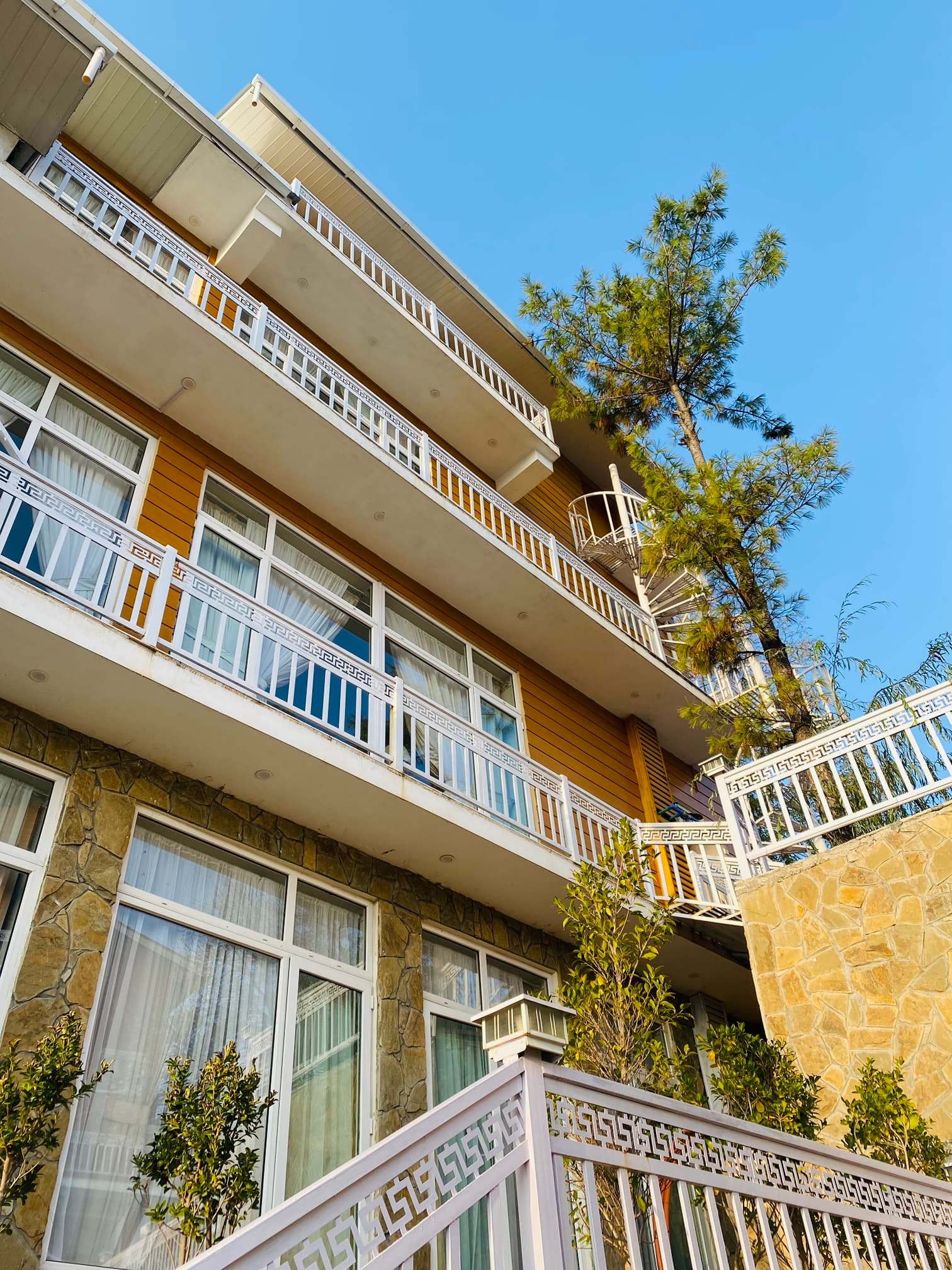
Himalaya Villas, at Mohra Iswal near Kashmiri Bazar in Bhurban, is one such property. It is a private cedar estate of three buildings — Rakaposhi Villa with five executive rooms, Himalaya Luxury Villas with four bedrooms, and Himalaya Apartments with two — eleven keys in total, and it books to one group at a time. There is no second party on the property while you are there, which is the whole of the point.
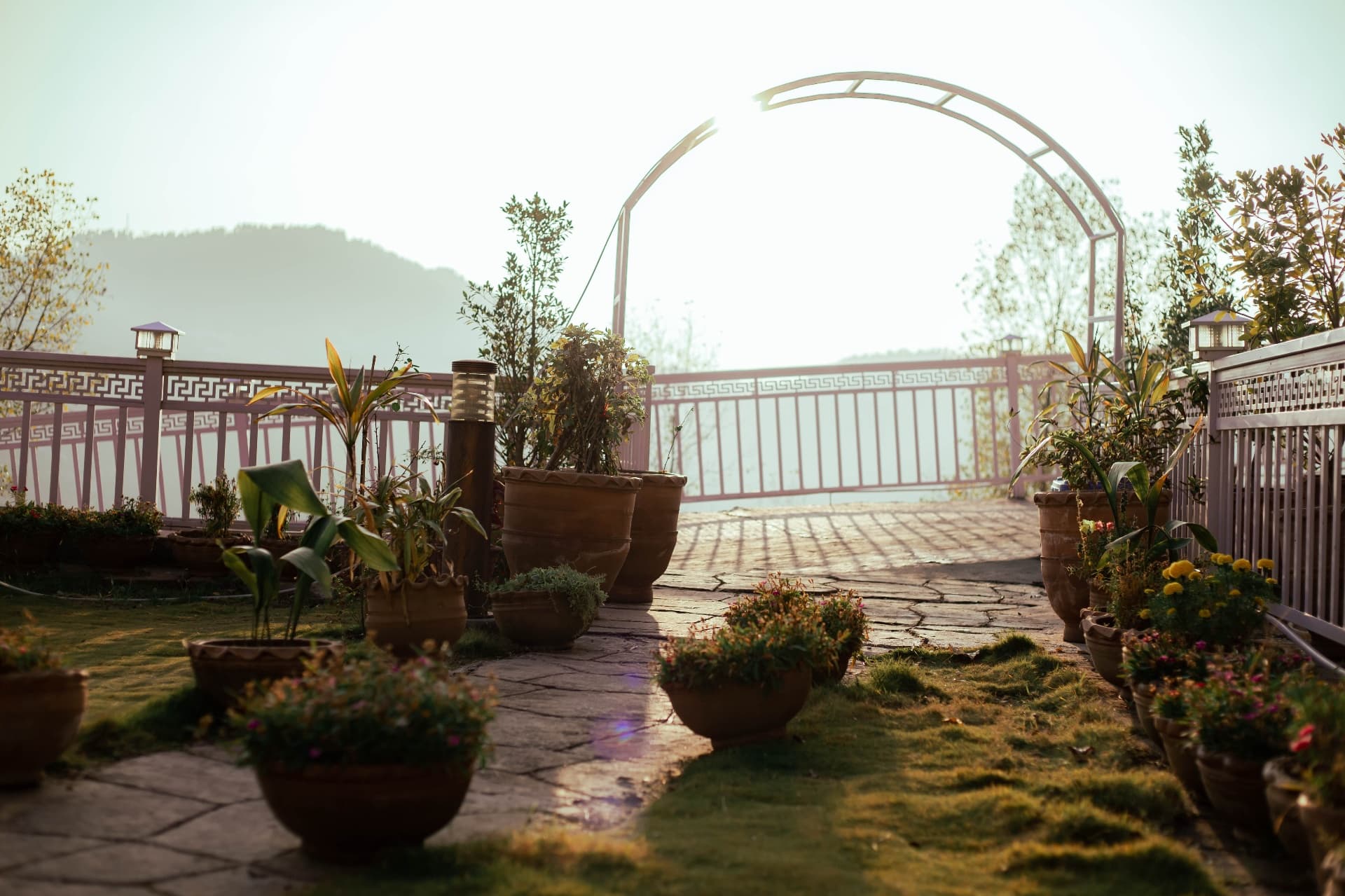
For music specifically, the relevant features are ordinary rather than exotic. A bonfire terrace cut into a forested slope, which is the acoustic environment described earlier in this guide — cedar behind the performance area absorbing reflections instead of a valley returning them. A café and BBQ facilities on site, so catering and the performance occupy the same footprint rather than requiring a marquee build. Room capacity across eleven keys at up to three persons per room, which comfortably absorbs a group of twenty to thirty plus the musicians. And no internal curfew imposed by other guests, because there are none — only the genuine external consideration of the hour and the neighbours, which the estate's separation from other households makes manageable rather than fraught.
The arithmetic tends to surprise people. Booking a hotel hall for an evening and rooms for a group of twenty-five is two separate transactions, and the hall is charged as a function whether or not the music is allowed to finish. On a whole-estate booking, the venue and the accommodation are the same line item — you are not renting a room to celebrate in, you are simply celebrating in the house you have already booked. For a group of this size the totals frequently land closer together than expected, and the exclusive-use option carries no curfew risk on top.
It will not suit everyone. A wedding of three hundred needs a marquee and a lawn, and this is not that. A couple who want a singer and a dinner without hosting anything should take a restaurant table for a fraction of the cost. The estate model earns its place for the gathering in between — twenty to forty people, a programme that matters to the host, and a real preference that it not be ended by somebody else's policy.
Message Himalaya Villas on WhatsApp with your date, guest count, and what you have in mind musically, and you will get a straight answer on availability and on what the evening can actually run to.
Enquire on WhatsApp →Direct enquiries are also where the flexibility on arrival times, catering and programme lives — it is not something the booking platforms are built to handle.
FAQ
Frequently Asked Questions: Live Music Venues in Murree and Bhurban
Is there a dedicated live music venue in Murree?
No. The Murree–Bhurban corridor has no purpose-built performance venue. What exists are hotels, restaurants and private estates that permit music on their premises under their own conditions. The practical question is which property will host your act, for how long, and at what volume.
How late can live music go at a hotel in Murree or Bhurban?
Most hotels enforce a stop between 10pm and 11pm, because other guests are sleeping in rooms above or beside the function space. Get the noise policy in writing before paying, and note that the duty manager on the night enforces it, not the sales coordinator who sold you the hall.
Can I host a private music night with no curfew near Islamabad?
Only on a property with no other paying guests. Exclusive-use estates in Bhurban, such as Himalaya Villas, admit one group at a time, so there is no internal curfew to enforce — just the external consideration of neighbours and the hour, which distance from other households largely resolves.
What does a live band cost for an event in Murree?
Indicatively, a solo vocalist runs PKR 40,000–90,000, an acoustic duo or trio PKR 90,000–200,000, a qawwali party PKR 150,000–400,000, and a full band PKR 250,000–700,000, plus a 20–40% uplift for Murree travel. Sound hire with an engineer adds PKR 60,000–150,000.
Do I need a licence for live music at a private event in Pakistan?
No performance licence is required for a private gathering on private property. What governs in practice is local administration discretion and neighbour tolerance. A complaint at midnight ends an event regardless of your contract, so physical separation from other homes matters more than paperwork.
What is the best season for an outdoor music event in the Murree hills?
Late April to mid-June is the strongest window — cool, dry evenings and late light. July to mid-September is monsoon and needs a genuinely covered performance area. Winter works with a bonfire and heating but suits a short outdoor opening moving indoors.
What power supply does a live music event in Bhurban need?
A 25–40 kVA generator with a stabiliser covers a small PA, lighting and catering for twenty to forty guests. Confirm it has an automatic transfer switch and an assigned overnight operator — grid voltage in the hills is unstable, and manual starts lose the room during a set.
How many guests can a private estate in Bhurban host for a music evening?
Estate scale in Bhurban is modest. Himalaya Villas runs eleven keys across three buildings at up to three persons per room, which suits a gathering of roughly twenty to thirty guests plus musicians. Wedding-scale functions of several hundred need a marquee and lawn instead.
Can musicians stay overnight at the venue?
They should. A band finishing at eleven is not driving down the hill in fog. On an exclusive-use estate this is an internal allocation within your own booking; at a hotel it is a separate paid reservation. Either budget for it or end the set early enough for a safe descent.
Is a marquee setup cheaper than booking a whole estate?
Rarely, at small guest counts. Marquee economics assume scale — you pay transport and setup for infrastructure a standing property already has. Below about fifty guests, a whole-estate booking where venue and accommodation are one line item usually costs less and carries no curfew risk.
Plan Your Perfect
Music Event in the Hills
Whether you're looking for a quiet acoustic evening or a full band performance, start planning your live music event today.
Book Now via WhatsApp