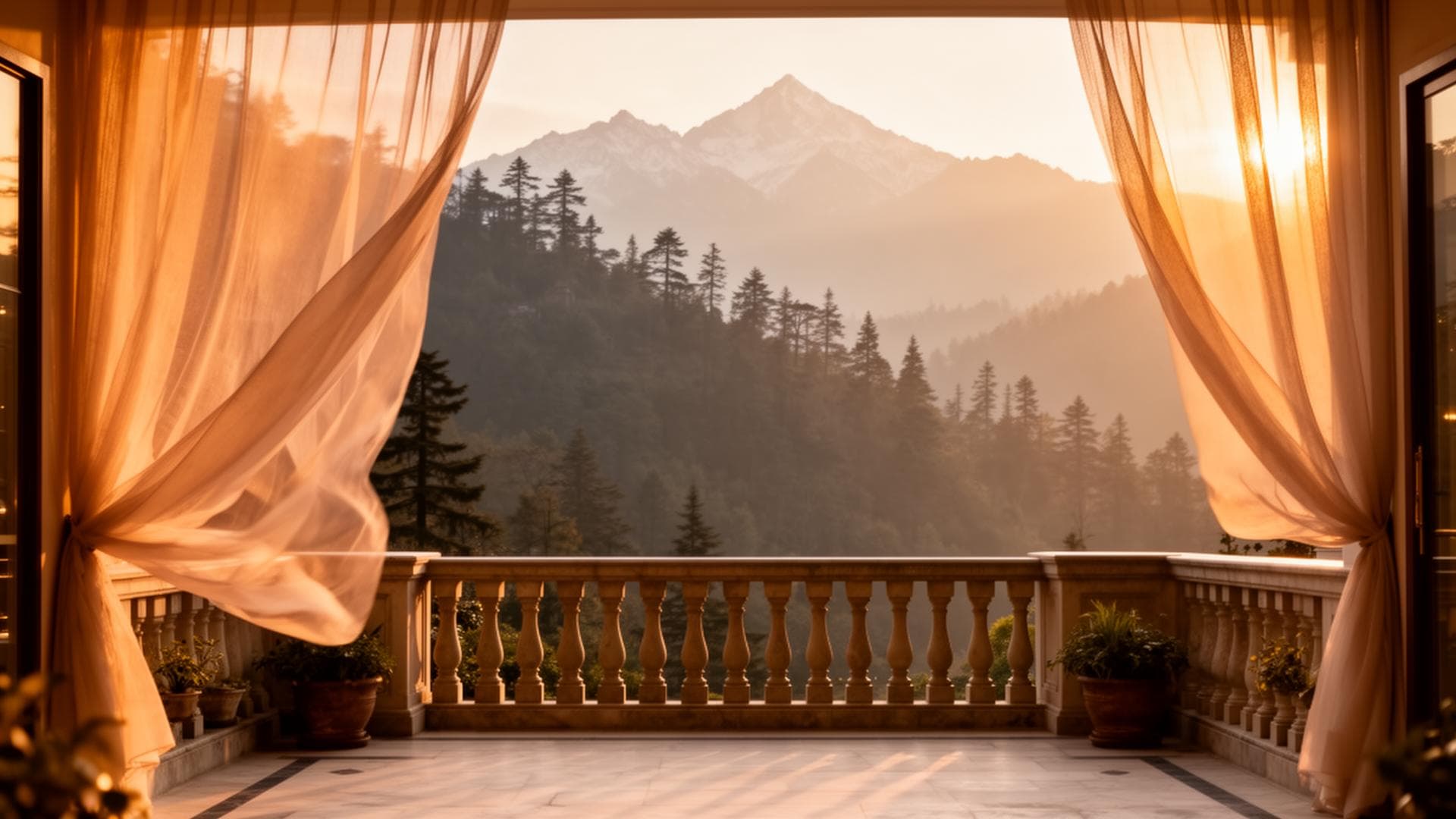
What type of forest is in Bhurban and Murree?
The Bhurban and Murree hills forest is primarily Deodar Cedar (Cedrus deodara) — the world's largest coniferous cedar species, growing to 40-60 metres in mature specimens. The deodar cedar is Pakistan's national tree. At 6,800 feet in Bhurban, the deodar cedar forms the dominant canopy, interspersed with Blue Pine (Pinus wallichiana) and, at lower elevations and on south-facing slopes, various deciduous species (Himalayan Oak, Wild Cherry). The mature cedar estate at Himalaya Villas has trees estimated at 100-200+ years old.
The Deodar Cedar — Pakistan's National Tree
The deodar cedar (Cedrus deodara — 'wood of the gods' in Sanskrit) is the defining natural feature of the Bhurban landscape — the species that creates the specific forest character, the specific smell, the specific quality of morning light through the canopy, and the specific acoustic of the forest in wind or rain.
Identification
The Cedar Forest at Different Times
The cedar forest changes character through the day in ways that reward the dawn visitor over the midday visitor:
5:45am (dawn): the forest in directional horizontal light — the cedar trunks lit from the east, long shadows across the path floor. The Koklass Pheasant calling from the understory. The first light in the needles. The specific quality of the dawn cedar walk that repeats guests consistently describe as the experience they miss most when back in Islamabad.
Midday: the cedar canopy at its most complete — the forest floor in dappled light, the temperature 2-3°C cooler under the canopy than in open sunlight. The smell intensified by the warmth.
After rain: the cedar resin at its most aromatic — the rain-saturated bark releasing the specific smell that fills the cedar garden. The drip through the canopy layers. The forest floor's fresh earthy smell.
9pm (fire pit): the cedar canopy visible above the cedar garden fire — the branches catching the fire light from below, the specific nighttime silhouette of the cedar architecture against the sky.
Frequently Asked Questions
How old are the cedar trees at Himalaya Villas?
The mature deodar cedar trees on the Himalaya Villas estate are estimated at 100-200+ years old based on trunk diameter and standard growth rate data. Deodar cedar grows slowly — a 2-metre trunk circumference represents approximately 150-200 years of growth.
Can I walk in the cedar forest at Himalaya Villas independently?
Yes — the cedar estate paths from the Himalaya Villas gate are maintained and safe for self-guided walks. The dawn walk from the estate gate at 5:45am is the most valuable single use of these paths.
Book the Cedar Forest Estate
WhatsApp +92 304 567 9000
Book your private villa stay at Himalaya Villas & Resorts.
Book Your StayDirect bookings receive the best available rate.